
AI in Telecommunication Market: Trends, Growth, and Future Insights
Tl;Dr
The AI in telecommunication market is experiencing explosive growth, transforming how telecom companies operate. Artificial intelligence is helping to improve network performance, enhance customer service through chatbots, and create new, smarter services. While there are challenges like high costs and data security, the future points toward even deeper integration of AI, making our digital communication faster, more reliable, and more personal.

Welcome to our deep dive into the exciting world of artificial intelligence in the telecommunications industry. This blog post will explore the rapidly expanding AI in telecommunication market. We will look at how AI is changing everything from the behind-the-scenes network operations to the customer service you interact with. Our goal is to provide a clear and comprehensive overview of the market's current state, its expected growth, the key trends shaping it, and what the future holds for this powerful combination of technologies. We will break down complex ideas into simple terms to understand how AI is making our connected world smarter.
The Unstoppable Rise of AI in Telecom
Artificial intelligence is no longer a futuristic concept; it's a powerful tool that telecom companies are using right now. The AI in telecommunication market is booming because AI helps solve some of the industry's biggest challenges. Think about the massive amount of data that flows through communication networks every second. AI algorithms can analyze this data in real-time to predict network failures before they happen, optimize signal strength, and ensure your calls and internet are crystal clear.
A recent study highlights this rapid adoption, showing that nearly 90% of telecom companies use AI in some form. This shows a massive shift in the industry. Companies are moving from simply piloting AI projects to actively deploying them to improve their services. This widespread adoption is a key factor driving the market's significant financial growth.
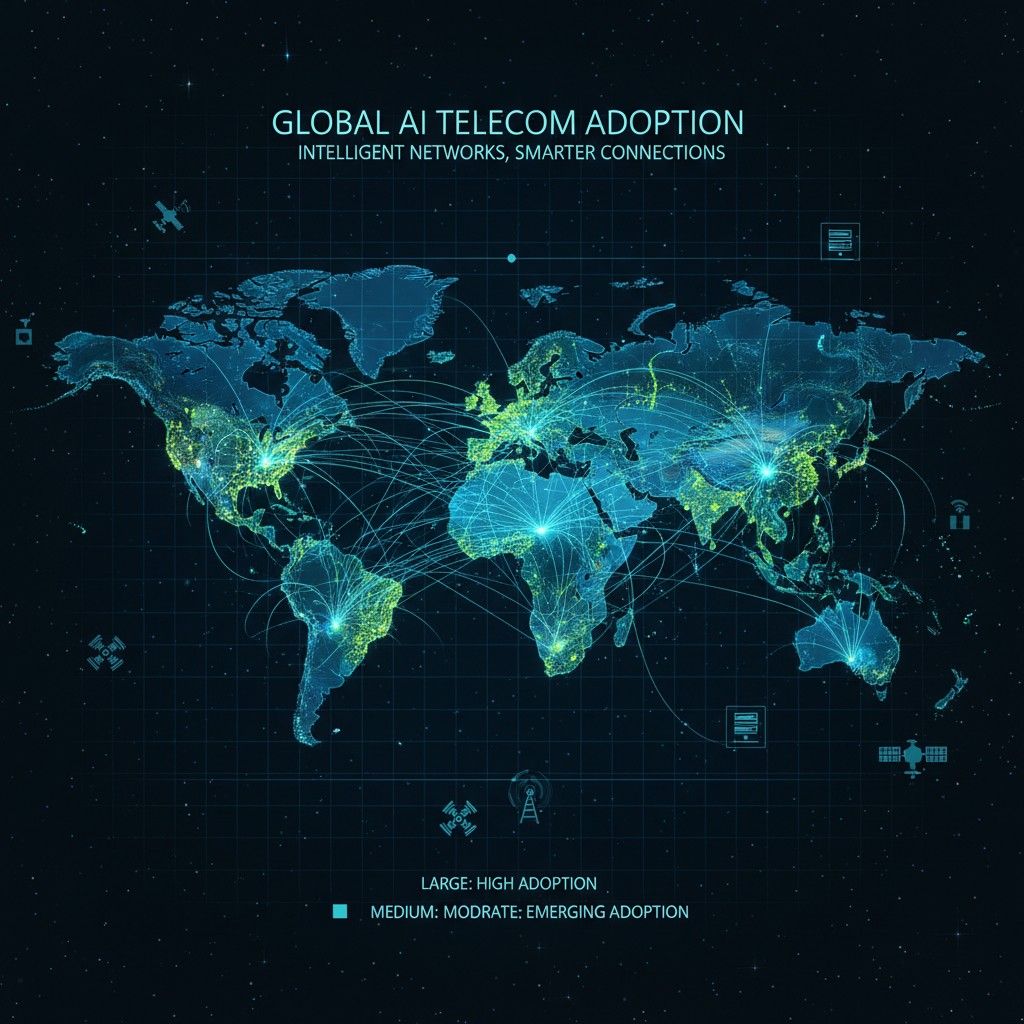
Decoding the Global AI in Telecommunication Market Growth
The numbers behind the market's expansion are truly staggering. The global AI in telecommunication market is on a trajectory of phenomenal growth. One report estimated the market size at USD 1.45 billion in 2022 and projects it to soar to USD 11.29 billion by 2030. Another analysis projects the market to grow from $6.73 billion in 2026 to an incredible $88.11 billion by 2034. While the exact numbers vary between reports, the message is the same: this market is exploding.
This rapid expansion is fueled by several factors:
- •
The 5G Revolution: The rollout of 5G technology creates more complex networks that require AI to manage them effectively.
- •
Customer Expectations: Consumers demand faster, more reliable service, and AI-powered tools help companies meet these demands.
- •
Operational Efficiency: AI automates repetitive tasks, reduces human error, and helps companies save money.
The US AI in telecommunication market represents a significant portion of this global growth, with American telecom giants heavily investing in AI to gain a competitive edge.
Key Applications Transforming the Industry
AI is not just one thing; it's a collection of technologies being used in many different ways across the telecom sector. A thorough AI in telecommunication market analysis reveals several key application areas where this technology is making a major impact.
Application Area | How AI is Used | Impact on the Industry |
Network Optimization | AI predicts traffic patterns, reroutes data to avoid congestion, and identifies potential hardware failures. | Improved network reliability, faster speeds, and fewer outages for customers. |
Customer Service | AI-powered chatbots and virtual assistants handle common customer queries 24/7, freeing up human agents. | Faster response times, reduced operational costs, and improved customer satisfaction. |
Predictive Maintenance | AI analyzes equipment data to predict when maintenance is needed, preventing unexpected breakdowns. | Increased uptime, lower maintenance costs, and extended lifespan of network equipment. |
Fraud Detection | Machine learning algorithms identify unusual patterns in real-time to detect and prevent fraudulent activity. | Enhanced security for both the company and its customers, and reduced financial losses. |
Marketing & Sales | The role of AI in marketing and telecommunication is growing, helping to personalize offers and campaigns. | Higher conversion rates, increased customer loyalty, and more effective marketing spend. |
These applications showcase the diverse AI in telecommunication market trends that are actively reshaping the industry from the ground up.

Overcoming the Hurdles on the Path to AI Integration
Despite the immense potential, adopting AI is not without its challenges. Telecom companies face several significant obstacles that can slow down or complicate the integration process. Understanding these challenges is crucial for a complete picture of the market.
One of the biggest hurdles is the initial cost. Implementing AI systems requires substantial investment in new software, hardware, and skilled personnel. Another major concern is data security and privacy. Telecoms handle vast amounts of sensitive customer data, and they must ensure their AI systems are secure from cyber threats.
Furthermore, processing the enormous quantities of data required for effective AI is a technical challenge in itself. As one industry resource points out, companies face obstacles including initial capital expenditures, security, and challenges in processing large quantities of data. Successfully navigating these issues is key to unlocking the full benefits of AI. The market's overall AI in telecommunication market share will likely be influenced by how effectively companies can overcome these barriers.
The Path Forward: Human-Centric AI Integration
The solution to overcoming these challenges and truly unlocking AI's potential lies not in simply deploying more technology, but in adopting a human-centric approach. The future of the AI in telecommunication market depends on building systems that augment human capabilities, not just replace them. This means investing in training and upskilling employees to work alongside AI tools. It also involves designing AI systems that are transparent and easy to understand, so that engineers and customer service agents can trust their outputs. By focusing on creating a collaborative environment where humans and AI work together, telecom companies can maximize efficiency, foster innovation, and build a more resilient and customer-focused business.
If you are interested in exploring how AI can be integrated into your business operations, you can learn more at whataiservices.com.

Key Takeaways
- •
Massive Growth: The AI in telecommunication market is one of the fastest-growing sectors, projected to be worth billions of dollars within the next decade.
- •
Core Drivers: The rollout of 5G, rising customer expectations, and the need for operational efficiency are fueling AI adoption.
- •
Key Applications: AI is transforming network optimization, customer service, predictive maintenance, and fraud detection.
- •
Significant Challenges: High initial costs, data security, and the complexity of data processing are major hurdles for companies.
- •
The Future is Collaborative: A human-centric approach that focuses on collaboration between employees and AI systems is the key to long-term success.
- •
Market Influence: The AI in telecommunication market trends show a clear shift towards smarter, automated, and more predictive operations across the industry.