
Top Mistakes Businesses Make With AI Cold Calling (And How to Avoid Them)
The idea of deploying an army of tireless virtual agents making thousands of calls a day sounds like a game-changer. For many, AI cold calling promises to solve the age-old challenges of sales: high turnover, inconsistent performance, and the sheer volume of calls needed to find a single qualified lead. However, many businesses dive in headfirst only to find their results are lackluster, their brand reputation is suffering, and they are attracting more complaints than customers.
The reality is that using an AI cold caller effectively is more nuanced than just uploading a contact list and pressing "start." The technology is powerful, but it’s not magic. A poorly executed cold calling AI strategy can burn through your lead lists, alienate prospects, and even land you in legal trouble. Simply having the software is not enough; success depends entirely on the strategy behind the voice.
This guide will break down the most common and costly mistakes businesses make when implementing AI cold calling. We will explore why these errors happen and provide clear, actionable steps to avoid them. From robotic scripts and data mismanagement to ignoring critical compliance rules, we will cover what you need to know to turn your AI cold calling bot from a liability into your most valuable sales asset.
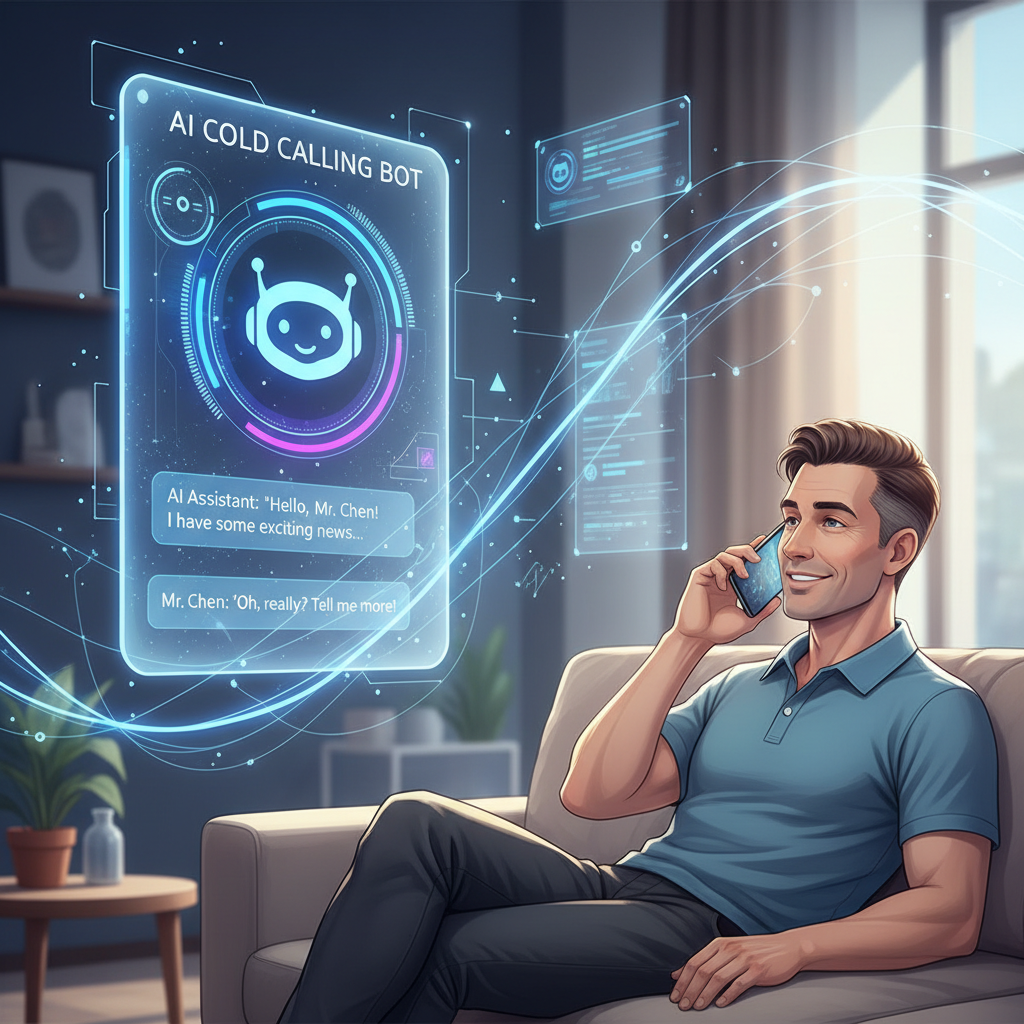
Mistake 1: Sounding Like a Robot
The single most significant mistake is deploying an AI cold caller that immediately sounds synthetic and unnatural. Prospects are conditioned to hang up on robotic-sounding calls. If the first few seconds of your pitch are filled with choppy audio, strange pauses, and a monotonous tone, you have already lost. The goal isn't to trick the person, but to engage them long enough to deliver your message.
This issue often stems from using outdated text-to-speech (TTS) technology or poorly designed scripts. An effective cold calling AI needs to mimic human conversation patterns, including natural intonations, ums and ahs, and the ability to respond dynamically. Without this, the prospect feels like they are being talked at by a machine, not engaged in a conversation.
How to Fix It: Invest in Conversational AI
Prioritize AI cold calling software that uses modern, neural TTS voices. These advanced systems are trained on thousands of hours of human speech and can replicate cadence and emotion with stunning accuracy. More importantly, focus on conversational design. Your script should not be a monologue. It needs to be a dialogue tree with branches for different responses, interruptions, and questions, allowing the AI to navigate the call fluidly.
Mistake 2: Ignoring Legal and Compliance Guardrails
Many businesses get so excited about the potential of AI for cold calling that they overlook the complex legal landscape. Regulations like the Telephone Consumer Protection Act (TCPA) in the United States, along with FTC guidelines, impose strict rules on automated calling. Using an AI agent for cold calling without understanding these laws is a fast track to hefty fines and legal battles.
A common pitfall is failing to obtain proper consent before calling mobile numbers or not providing a clear and immediate opt-out mechanism. Furthermore, the identity of the caller must be transparent. Hiding the fact that the call is from an AI cold calling bot or misrepresenting the company can lead to severe penalties. These legal frameworks are constantly evolving, making ignorance a dangerous strategy.
How to Fix It: Build Compliance into Your Strategy
First, consult with legal counsel to understand the specific regulations in the regions you are calling. Use AI cold calling software that has built-in compliance features, such as automatic Do-Not-Call (DNC) list scrubbing and time-zone-aware dialing. Always include a clear, upfront disclosure (e.g., "Hi, this is a recorded line," or "I'm an AI assistant…") and ensure your AI can process opt-out requests instantly and permanently add the number to your internal DNC list. Transparency is not just good practice; it's the law.

Mistake 3: Using Bad Data
Your AI cold caller is only as good as the data you feed it. A frequent mistake is purchasing cheap, outdated contact lists and expecting stellar results. Calling incorrect numbers, using the wrong names, or contacting people who are no longer with a company wastes resources and makes your brand look incompetent. It signals to the prospect that you have not done your homework.
This problem extends to a lack of data enrichment. If your list only contains a name and a phone number, your AI has no context for the call. It cannot personalize the conversation by mentioning the prospect's industry, company size, or recent business activities. This results in generic, one-size-fits-all pitches that fail to resonate with anyone.
How to Fix It: Prioritize Data Hygiene and Enrichment
Invest in high-quality, verified lead data from reputable sources. Before launching any campaign, perform a data hygiene check to remove invalid numbers and outdated contacts. More importantly, enrich your data. Use tools to append information like job titles, industry specifics, and company firmographics. This allows your cold calling AI to personalize the opening line, making the call immediately more relevant and harder to dismiss.
Mistake 4: No Seamless Human Handoff
Even the most advanced AI for cold calling will encounter situations it cannot handle. A prospect might ask a highly technical question, express strong interest and want to speak to a decision-maker immediately, or become frustrated. The critical mistake here is having no "escape hatch." If the AI cold calling bot hits a wall and can only apologize and end the call, you are throwing away a warm lead.
This creates a frustrating dead-end experience for the prospect. They have invested time in the conversation, only to be cut off at the most crucial moment. This failure to transfer a qualified, interested lead to a live human agent is one of the most significant missed opportunities in AI-powered sales.
How to Fix It: Implement Smart Routing and Live Transfers
Design a robust handoff protocol. Your AI cold calling software should be able to detect key trigger phrases (e.g., "Can I speak to a person?") or analyze sentiment to identify when a human touch is needed. The transfer should be seamless, with the AI politely introducing the human agent who will be taking over. The system must also pass all relevant call data and a conversation summary to the agent, so the prospect doesn't have to repeat everything.
Mistake 5: Failing to Personalize at Scale
One of the biggest promises of AI is the ability to personalize interactions at a massive scale. Yet, many businesses fall into the trap of using their powerful AI cold calling software to blast out the same generic message to thousands of people. This is no better than the robocalls everyone despises. The "AI" is being used for volume, not intelligence.
This mistake is particularly damaging in specialized fields like AI cold calling for real estate, where local market knowledge and personal context are key. A generic script about "investment opportunities" will fail if it doesn't reference the prospect's specific neighborhood or property history. Without personalization, your AI is just a loud, inefficient machine.
How to Fix It: Leverage Dynamic Scripting
Use your enriched data to create dynamic scripts. A truly smart AI cold caller should be able to insert variables like the prospect's name, company, industry, or even a recent news event related to their business. The opening should feel like it was crafted for them alone. For example, instead of "We help businesses increase sales," try "I saw that [Company Name] is expanding in the logistics sector, and we specialize in helping logistics firms optimize their routing." This level of detail captures attention instantly.

Mistake 6: Not A/B Testing and Iterating
Launching an AI cold calling campaign and letting it run unchanged for months is a recipe for stagnation. What works for one demographic might not work for another. One opening line might have a great response rate, while another causes immediate hangups. Many businesses make the mistake of setting their campaign and forgetting it, failing to learn from the vast amount of data their AI is collecting.
Every call is a data point. It tells you which parts of your script are working, where prospects are getting confused, and what objections are most common. Ignoring this feedback loop is like ignoring free coaching on how to improve your sales pitch.
How to Fix It: Embrace Continuous Optimization
Treat your AI cold calling campaigns like a science experiment. Continuously A/B test different elements:
- •
Openers: Test various opening lines to see which one keeps people on the phone the longest.
- •
Value Propositions: Try framing your product's benefits in different ways.
- •
Calls to Action (CTAs): Test different closing questions to see which one converts best.
- •
Voices: Some audiences may respond better to a male voice, others to a female voice. Test different AI personas.
Your Next Step: From Mistakes to Mastery
Implementing an AI cold calling strategy is not just about adopting new technology; it’s about refining your entire sales outreach process. By avoiding these common pitfalls, you can transform your AI from a simple dialer into an intelligent, efficient, and compliant sales development machine. The key is to focus on creating a positive, human-like experience, even when a human isn't on the line.
Ready to see how a properly configured AI cold caller can revolutionize your outreach? The team at What AI Services specializes in crafting compliant, conversational, and high-converting AI calling strategies. We can help you audit your current process, clean your data, and design campaigns that deliver real results. Stop making costly mistakes and start building a smarter sales pipeline today.