
How to Monetize AI in 2026: Strategies, Models, and Insights
In 2026, AI assistants are no longer side projects. They’re inside email, CRMs, finance tools, support platforms, and internal dashboards. Global AI software spend is projected to cross hundreds of billions of dollars before the decade ends, with a growing share going to applications and agents rather than just core models.
Analysts tracking enterprise adoption report that well over half of organisations now use AI in at least one business function, and a rapidly increasing slice of that spend is tied to assistants and agentic workflows rather than isolated experiments.
The reality on the ground is a bit messy:
- •
Some teams bolted “AI” onto their product, priced it as a flat add-on, and now discover their margins don’t work.
- •
Others underpriced usage-heavy features and are subsidising their noisiest customers.
- •
A third group never moved beyond pilots because no one could agree on a pricing model finance, sales, and customers all felt comfortable with.
So the real question isn’t “Can we add AI?” but:
- •
How do we turn assistants and agents into a sustainable, believable revenue engine without burning our margins or confusing our buyers?
This article walks through how to think about AI assistant company monetization in 2026:
- •
The main pricing models and where they fail
- •
A simple framework for choosing what fits your product
- •
Why most teams shouldn’t lock this in alone
- •
How What AI Services fits into this picture
The goal is not to turn you into a full-time pricing consultant. It’s to give you enough clarity to see the trade-offs and to know when you need a specialist in the room before you hard-freeze the wrong model.

The Shift Toward Agents and Workflows
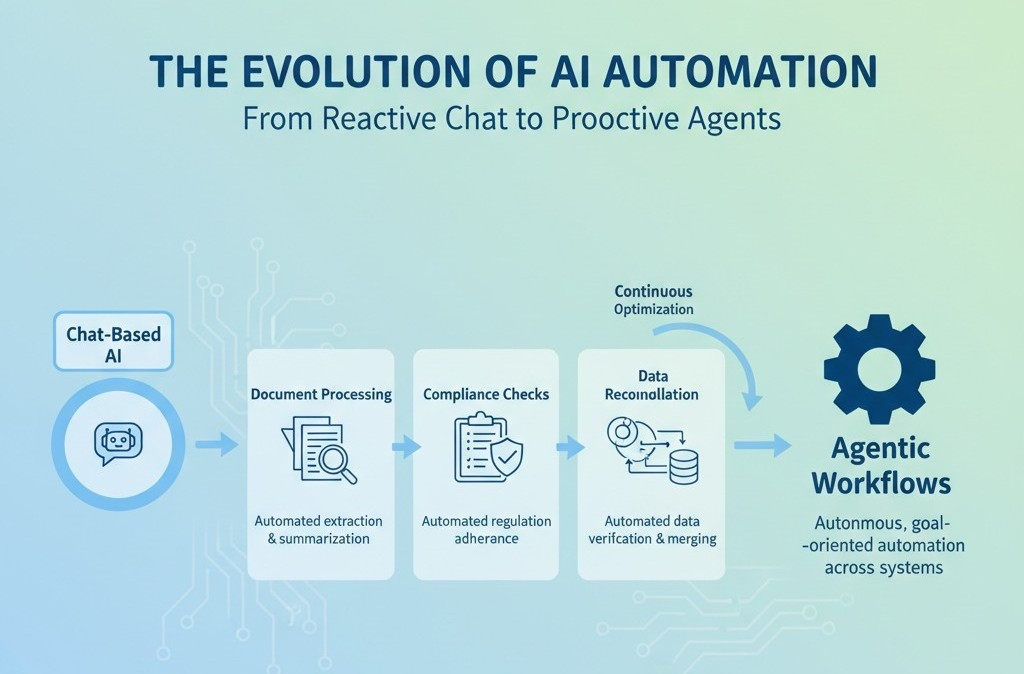
2026 trend reports from consulting firms and analysts all point to the same pattern: AI agents and agentic workflows are the big theme. These are systems that not only answer questions but log into tools, move data, and close loops automatically.
Surveys of senior leaders show that while roughly half of agentic AI projects are still stuck in pilot, budgets are rising and the highest-ROI use cases are emerging in “boring” areas like document processing, compliance checks, data reconciliation, and invoice handling. That is where assistants stop being toys and start being line-items. Monetization has to follow that shift from chat to workflow.
Before touching pricing, it helps to be precise about value.
Most Successful Assistants Fall Into Three Buckets
Knowledge Work Copilots
These tools sit inside everyday applications: email, docs, CRM, code editors, design tools. They summarise, draft, translate, and search across internal knowledge. Value comes from time saved and reduced friction for individual users.
Typical metrics:
- •
Fewer minutes per task (emails, reports, tickets).
- •
More volume handled per person (cases per agent, deals per rep).
- •
Higher satisfaction scores from knowledge workers.
Back-Office and Operations Automation
Here, assistants handle structured, repetitive workflows: invoice matching, claims triage, policy checks, reconciliations, and data entry. Trend reports show this category delivering some of the highest ROI, precisely because the work is measurable and high volume.
Typical metrics:
- •
Cost per transaction (invoice, claim, record).
- •
Error rate and rework volume.
- •
Processing time and backlog size.
Customer-Facing Agents
These systems answer questions, troubleshoot problems, route customers, and sometimes close sales over chat, voice, or email. The best ones authenticate users, integrate with backends, and resolve issues end-to-end, not just deflect tickets.
Typical metrics:
- •
Containment rate (issues solved without human hand-off).
- •
First-contact resolution.
- •
NPS / CSAT for AI-handled interactions.
Where your assistant sits on this map determines the kind of value customers see first, and that should heavily influence how you charge.

Main Pricing Models and AI Assistant Monetization Methods
Most AI products use a mix of four core models. Understanding them clearly helps avoid messy, confusing pricing that scares buyers.
The Four Common Models
Model | What customers pay for | Works best when | Risk if misused |
Per-seat / per-user | Number of human users who have access | Copilots in everyday tools, consistent daily usage | Light users overpay, value feels vague |
Usage-based / credits | Volume of actions: tokens, tasks, calls, minutes | APIs, embedded assistants, high-variance workloads | Bills feel unpredictable, finance teams push back |
Outcome-based | Verified outcomes (resolved tickets, qualified leads) | Back-office operations, sales or support with clear metrics | Hard to measure, heavy risk if data is noisy |
Hybrid (seat + usage/outcome) | Base subscription plus usage or outcome overages | Enterprise platforms with mixed intensity across users | Complexity if tiers and limits aren’t simple |
Where These Models Go Wrong
You’ve probably seen at least one of these play out:
- •
Per-seat by habit
“We always sold per seat, let’s just add an AI seat.”
Six months later, half the company has access, a handful of power users drive 80% of the load, and your infra costs don’t match your revenue.
- •
Usage-only chaos
Token or request-based pricing that looks clean in a spreadsheet but makes budgeting impossible for the customer. Great tech, but procurement panics because no one can forecast the bill.
- •
Over-promised outcomes
Teams pricing per “resolved case” or “qualified lead” without robust instrumentation. Disputes, awkward QBRs, and a quiet internal decision: “Let’s never do that again.”
- •
Hybrid soup
Tiered, seat-based, with usage add-ons, overage rates, credits, exemptions… and no one can explain it in one slide.
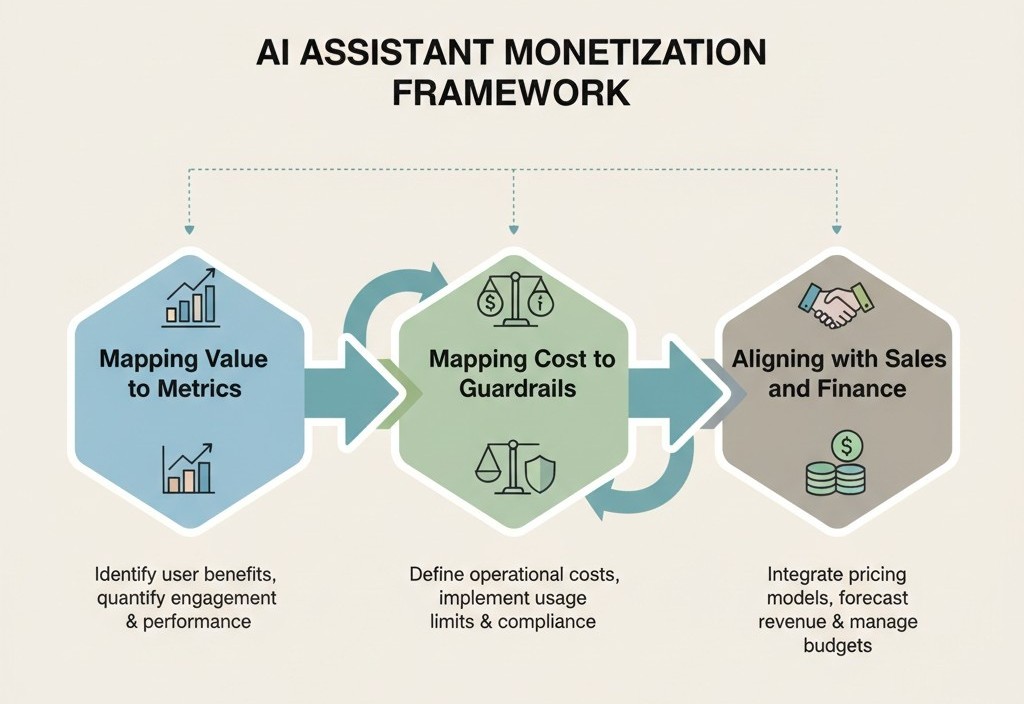
A Simple Framework for AI Assistant Monetization
Instead of starting from “Which model do we like?”, flip the order.
Step 1: Map Value → Metric
For your top 2–3 use cases, ask:
What is the primary outcome the customer cares about?
- •
Time saved?
- •
Cost per transaction?
- •
Revenue impact?
- •
Risk reduction / compliance?
What is the cleanest signal of that outcome that we can track?
- •
Users actively using the assistant
- •
Transactions the assistant touches
- •
Cases fully resolved
- •
Amount of content / data processed
This gives you a shortlist of pricing candidates grounded in reality, not vibes.
Step 2: Map Cost → Guardrail
Now look at your side:
- •
What drives your cost curve?
- •
Model calls and context length
- •
Retrieval / vector search
- •
Orchestration, tools, and human review
- •
Support, SLAs, onboarding
Pick a guardrail that keeps margins sane when heavy users show up.
Examples:
- •
Seat-based primary, usage caps as guardrail
- •
Outcome-based primary, platform minimum as guardrail
- •
Usage-based primary, discounted commit as guardrail
Step 3: Check Against Sales & Finance
Ask three brutal questions:
- •
Can a salesperson explain this model in under 60 seconds?
- •
Can finance build a forecast that doesn’t look like fan fiction?
- •
Can a customer estimate their first-year bill with basic napkin math?
If you don’t get three yeses, simplify. Complexity kills adoption faster than a slightly “imperfect” model ever will.
Common Monetization Traps (And How to Dodge Them)
The “Let’s Just Copy X” Trap
Copying a famous company’s pricing (OpenAI, Microsoft, whatever) ignores:
- •
Different infra costs
- •
Different customer segments
- •
Different go-to-market motion
- •
Different brand trust and negotiation power
What works for a hyperscaler with giant margins and cross-sell potential might be fatal for a mid-stage SaaS company.
The “Infra Is Someone Else’s Problem” Trap
Infra and model costs are not a separate story from pricing, they are the story.
If you don’t tie pricing to:
- •
Context length and query patterns
- •
Heavy versus light accounts
- •
Seasonality and peaks
You’ll get surprised by bills after the pricing is live, when it’s hardest to change without losing trust.
The “Outcome But No Instrumentation” Trap
Outcome-based pricing sounds heroic until:
- •
“Resolved ticket” means something different for each customer
- •
Half of the work is done by the human, half by the agent, and no one knows who gets credit
- •
Data quality is garbage
Without strong instrumentation, clear definitions, and agreed baselines, outcome pricing becomes an argument, not a revenue stream.
Why Most Teams Shouldn’t Lock This in Alone
This is the honest part: the problem is not intelligence, it’s alignment.
Inside most companies, this is what happens:
- •
Product wants adoption and retention
- •
Sales wants something easy to sell and discount
- •
Finance wants margin and predictability
- •
Legal wants low risk
- •
Ops wants realistic implementation promises
Monetization decisions sit at the collision point of all of that. When you hard-lock a model without doing this properly, you create:
- •
Customers locked into unfair or confusing terms
- •
Sales hacks and backdoor discounts to close deals
- •
Pricing debt that will be painful to unwind at scale
You can brute-force a model and “fix it later,” but fixing it later with paying customers, live contracts, and internal quotas on the line is a very expensive hobby.

How “What AI Services” Helps Companies Monetize Their AI Assistants
Here’s where we stop being abstract.
What AI Services sits between your product, operations, and revenue teams to help you design and roll out AI monetization that doesn’t blow up six months later.
Typical work with a client looks like this:
Audit and Reality Check
- •
We map your current assistant and workloads: where it sits, who uses it, what jobs it actually does.
- •
We dig into unit economics: model usage, infra costs, support overhead, and where cost spikes really come from.
- •
We surface the gap between how leadership thinks value is created versus what data and usage patterns show.
Design of a Monetization Model That Can Survive Contact with Reality
Together with your team, we:
- •
Choose the right AI assistant monetization methods (seat, usage, outcome, hybrid) for each segment or product line.
- •
Define clean metrics and thresholds that sales can sell and finance can forecast.
- •
Package your assistant into offers that match real buying centres (Support, Ops, RevOps, Product), not vague “AI features.”
Rollout, Guardrails, and Story
We help you:
- •
Test pricing in controlled pilots instead of guessing in production.
- •
Put guardrails in place so heavy usage doesn’t quietly erode margins.
- •
Craft the narrative for customers, investors, and your own teams: why you priced this way, what value they get, and how it scales.
We’re not trying to own your roadmap. Our job is to make sure you don’t ship a pricing model that looks clever on paper but collapses under real usage.
If reading this article feels uncomfortably close to your current situation, that’s your signal: you’re in the zone where guessing is expensive.