
Agentic AI in Customer Service: Examples That Go Beyond Ticket Deflection
Customer service is the easiest place to “try AI”… and the easiest place to mess it up
Most teams start customer service AI with the same goal: deflect tickets, reduce costs, and give customers faster answers. Then reality hits. Traditional bots handle FAQs, but the moment the issue needs context (“what happened on my account?”) or action (“fix it”), the bot collapses into handoffs, delays, and angry customers.
That’s why agentic AI in customer service is showing up in 2026 roadmaps everywhere: it’s the first AI category that can move from “answering” to “resolving.” Instead of just replying with guidance, agentic systems can investigate a problem across tools, take steps to fix it, and confirm resolution sometimes before the customer even follows up. Also described as the next frontier where agentic AI can coordinate fixes across systems and close the loop end-to-end.
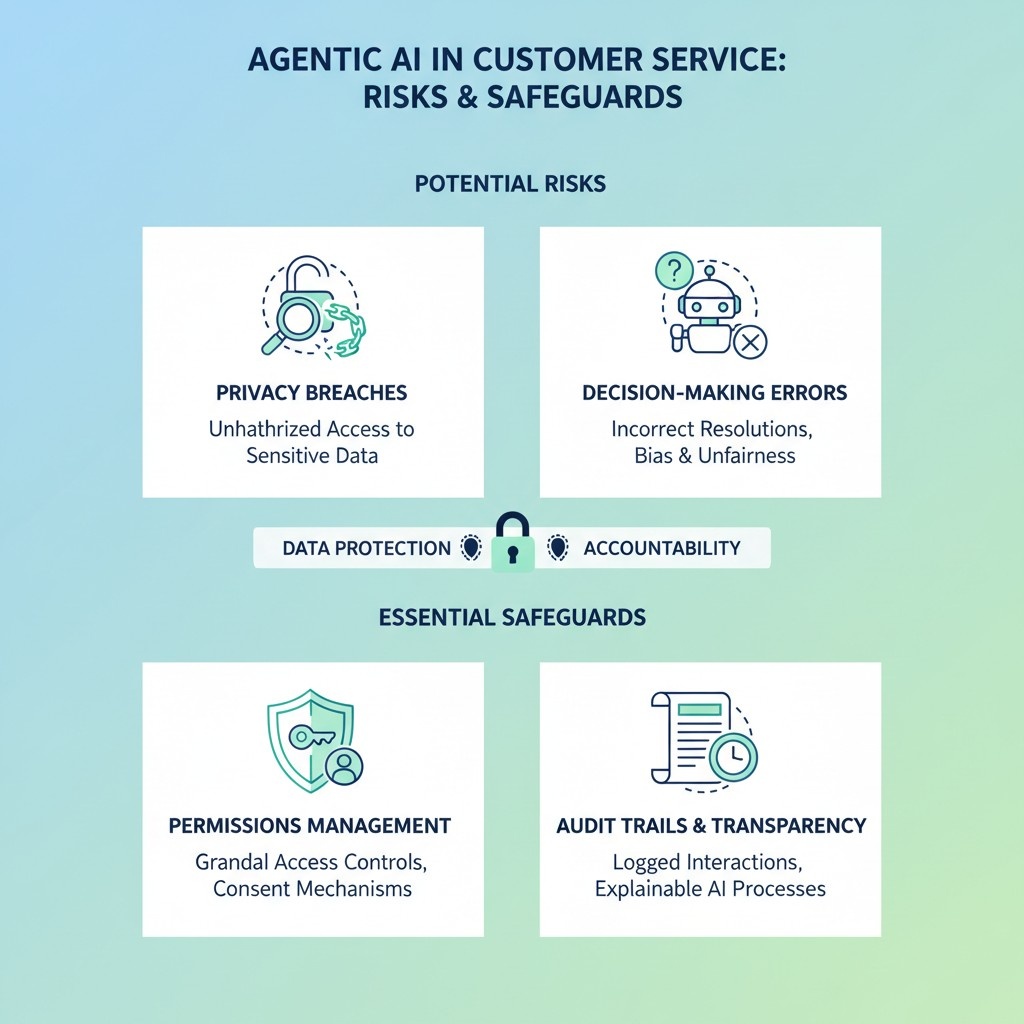
But there’s a catch: the more autonomy you give AI, the more you need governance, observability, and clear scope. Gartner has warned that many “agentic” initiatives will fail due to cost, unclear value, or weak controls basically, hype without operating discipline. And recent surveys show a large share of agentic projects are still stuck in pilots, largely due to security, compliance, and scale-management barriers.
This guide is the clean, buyer-friendly breakdown: what agentic AI really means inside support, what use cases actually work, what not to automate yet, and how What AI Services approaches agentic workflows in real customer operations (without turning your helpdesk into a science experiment).
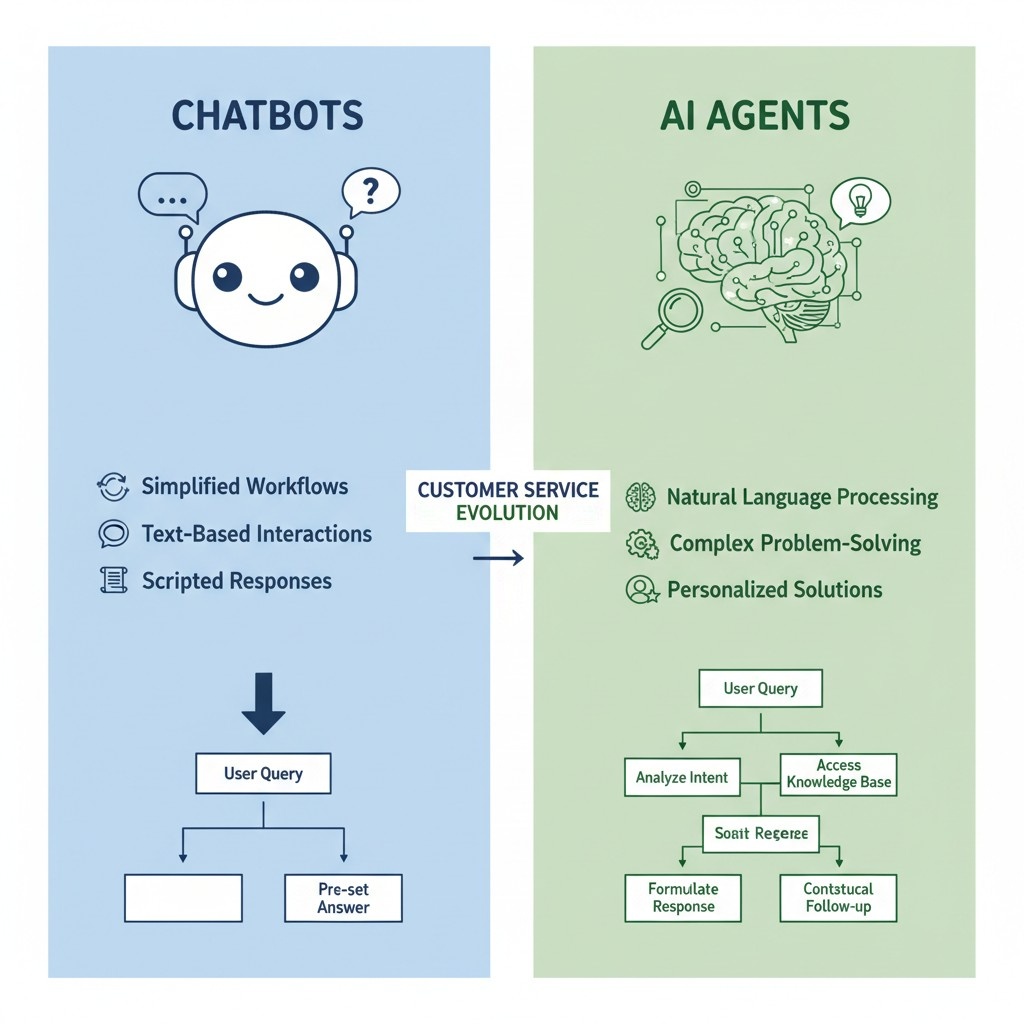
What “Agentic” Changes in Customer Service
Most customer service AI discussions get stuck in definitions. Here’s the practical difference that you need to keep in mind:
- •
Chatbots answer questions.
- •
Agents resolve issues.
AI agents are designed to use tools and take actions, not just fetch text. Major AI experts describe agents as systems that can adapt and perform tasks across systems, whereas chatbots are usually limited to scripted flows and retrieval.
An AI agent in customer service does three things in sequence:
- •
Understand intent + context
- •
Investigate by pulling data from systems
- •
Execute a workflow (change, update, refund, schedule, escalate) with proof
When this becomes “agentic,” you’re not deploying one smart bot, you’re deploying a workflow brain that can plan steps and coordinate actions.
AI Agents vs Chatbots in Customer Service: The Comparison That Stops Bad Purchases
Here’s the side-by-side that procurement teams need (and it’ll save you months).
Capability | Chatbots | AI Agents |
Primary job | Answer & deflect | Resolve & complete |
Tool access | Limited or none | Reads + writes across systems (CRM, billing, order mgmt) |
Workflow depth | Single-step or scripted flows | Multi-step plans with retries, fallbacks, validation |
Risk profile | Mostly UX risk (wrong answer) | Operational risk (wrong action) |
Best fit | FAQs, basic routing | Billing fixes, claims status actions, proactive resolution |
This is the cleanest way to describe AI agents vs chatbots in customer service: if the problem requires changing something in a system, a chatbot is a dead end.
Why Everyone Wants Agentic AI in 2026, and Why Many Teams Stall
Two big themes show up across 2025–2026 research:
- •
Leadership expects bigger impact than “deflection”
Insurers, telcos, banks, and marketplaces are pushing toward faster resolution and personalized interactions. For example, KPMG’s 2026 Insurance CEO Outlook notes that many insurance leaders expect agentic AI to improve underwriting, buying insurance, claims, and queryC/call-center triage. 5
- •
But execution is getting blocked by controls and clarity
Gartner predicts a large percentage of agentic initiatives will be canceled by 2027 due to cost, unclear value, or inadequate risk controls. 6 And a Dynatrace survey summary reports many deployments remain pilot-bound, with security/compliance and scale-management as top barriers.
Translation: the winners won’t be the teams with the coolest demo. They’ll be the teams with the cleanest operating model.
Best Use Case of Agentic AI in Customer Service: Start Where “Resolution” Is Measurable
If you’re trying to pick the best use case of agentic ai in customer service, don’t start with “hard conversations.” Start with “hard workflows.”
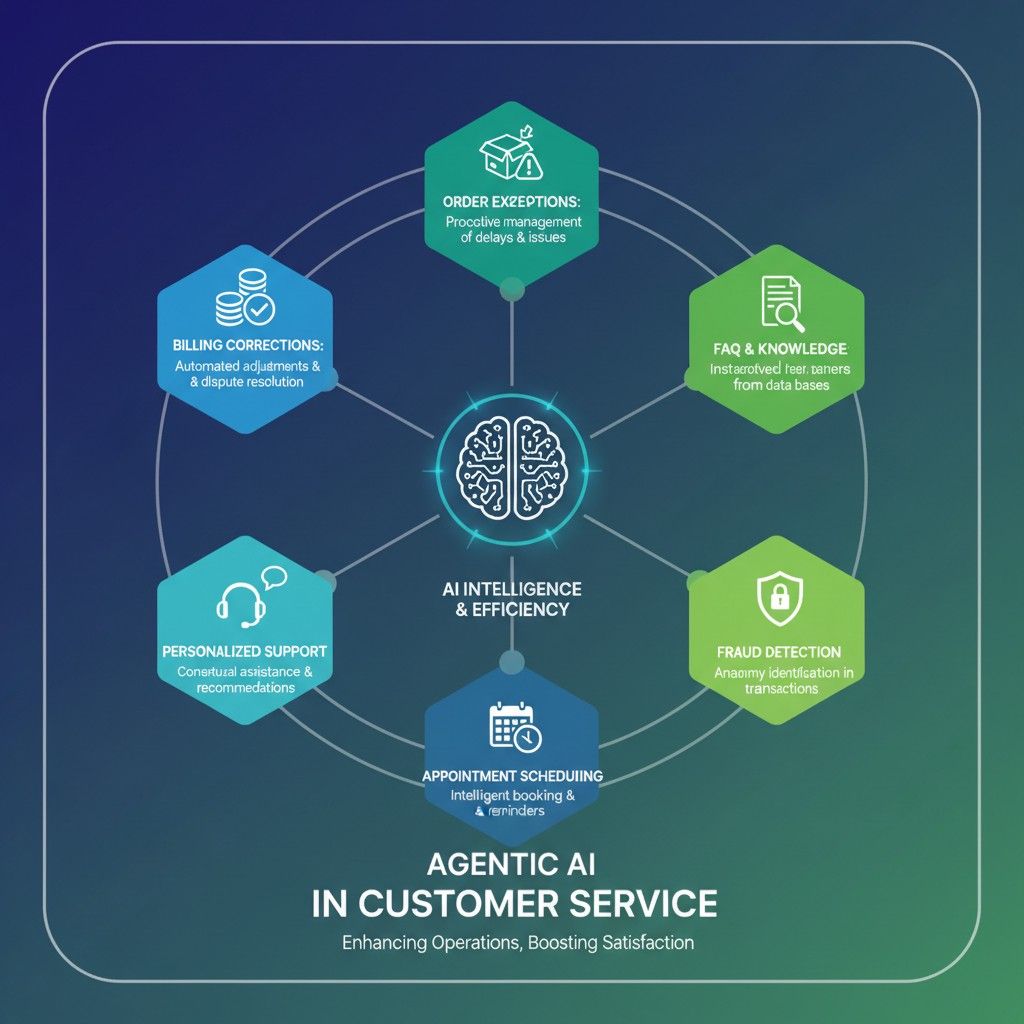
Here are the categories that most consistently produce ROI because success is binary:
- •
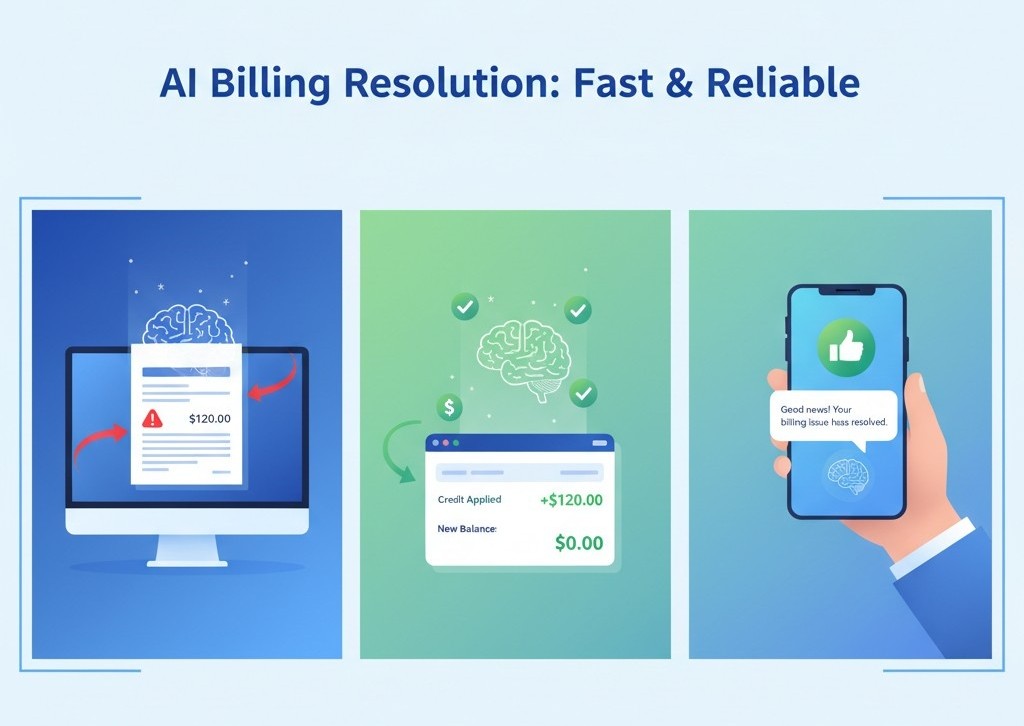
Billing investigation + correction
This is classic agent territory:
- •
Detect discrepancy
- •
Investigate across invoices/usage
- •
Apply correction
- •
Notify customers
- •
Order / delivery exceptions
“Where is my order?” becomes:
- •
Check carrier
- •
Check warehouse
- •
Trigger reship/refund under policy
- •
Update status
- •
Message customer
- •
Subscription + account changes
Not just “how to cancel,” but:
- •
Verify account
- •
Apply correct cancellation flow
- •
Confirm proration
- •
Generate confirmation
- •
Claims intake + status workflows (insurance)
This is where AI agents for customer service in insurance get real value: intake, documentation checks, status updates, and nudging missing items, while escalating edge cases. McKinsey notes insurers are using AI across customer interactions, including voice assistants and improved engagement flows.
Agentic AI in Customer Service Examples: What It Looks Like When It’s Done Right
Here are tangible patterns (not theory).
Example A: “Fix my bill”
- •
Agent pulls plan + usage + invoice line items
- •
Finds mismatch based on policy rules
- •
Applies credit (within threshold)
- •
Updates CRM + sends confirmation
- •
Logs full audit trail for human review
Example B: “Claim status + missing docs” (insurance)
- •
Agent checks claim stage
- •
Detects missing police report / photos / forms
- •
Sends a structured request to customer
- •
Sets reminders, updates claim notes
- •
Escalates if timelines or fraud signals appear
Example C: “Proactive resolution”
Before a customer calls, the agent detects a repeat failure (e.g., payment reversal, shipment stuck), opens a case, triggers the right internal workflow, and sends an update. This “prevent the ticket” idea is explicitly called out as feasible with agentic AI coordination.
That’s the core of agentic AI in customer service examples: the customer doesn’t experience “AI.” They experience speed.
The Use-Case Map: What to Automate First vs What to Leave Human
Use case | Agent-ready in 2026? | Why |
Refunds/credits under a policy threshold | Yes | Clear rules + reversible actions |
Status checks + proactive updates | Yes | Low risk, high volume |
Billing discrepancy investigation | Yes (with guardrails) | High ROI, needs logging |
Escalations with full context handoff | Yes | Improves human productivity |
Complex emotional complaints | Usually no | High brand risk; keep human-led |
Policy exceptions without clear rules | No | Agents need constraints to be safe |
This is the difference between “AI support” and truly operational agentic AI use cases in customer service.
What Makes a Customer Service System “Agentic” (Without Overcomplicating It)
If you’re building a real agentic stack, the “smartness” is only part of it. The real system is:
- •
Tools + permissions
Agents must have explicit “can read” and “can write” boundaries (and most should not be able to write everywhere).
- •
Policies as code
Refund limits, eligibility rules, escalation rules—these should be structured, not implied.
- •
Observability
Dynatrace’s survey summary points to observability as a major need across development and operations for agentic AI. 11 If you can’t trace what the agent did, you can’t scale it.
- •
Human-in-the-loop where it matters
Even in advanced deployments, teams keep humans verifying or supervising a portion of decisions, especially when consequences are high.
How Insurance Customer Service Uses Agentic AI (Without Breaking Trust)
Insurance is a perfect stress-test: high regulation, high sensitivity, high expectation for fairness.
KPMG’s 2026 report notes that agentic AI is expected to impact underwriting, buying insurance, claims, and resolving queries, including call-center triage. But the same report highlights trust and ethical concerns as major implementation obstacles.
So the correct approach in insurance support is staged:
Stage 1: assist + collect
Gather information, explain next steps, and route correctly.
Stage 2: resolve within policy boundaries
Apply standard actions (status updates, missing-doc nudges, simple approvals).
Stage 3: proactive retention + prevention
Detect likely disputes early and resolve before they escalate.
This is how you get speed without triggering “the AI is denying claims” paranoia.
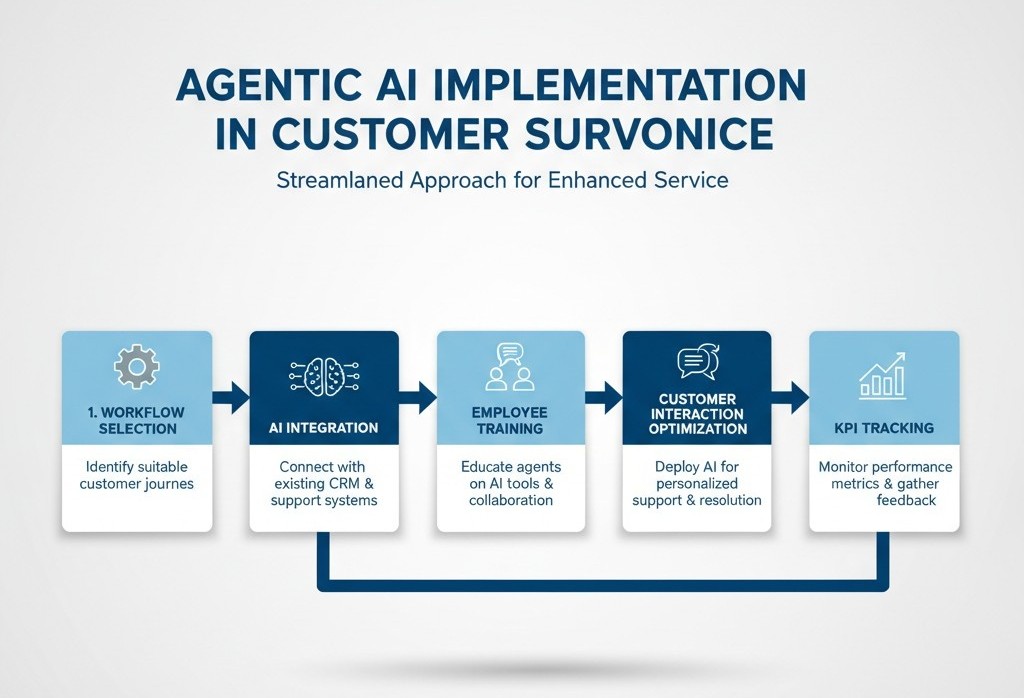
Implementation in 6 Steps: A Rollout That Doesn’t Melt Your Ops Team
Step 1: Pick one workflow with a clean finish line
Example: “refund under $50,” “update shipping address,” “claim status + missing doc request.”
Step 2: Design the guardrails first
Write down:
- •
What the agent can do
- •
What it must never do
- •
When it must escalate
Step 3: Connect the minimum tools needed
Don’t connect everything. Start narrow.
Step 4: Run shadow mode
The agent proposes actions; humans approve. This exposes failure modes cheaply.
Step 5: Turn on bounded autonomy
Let it execute only safe actions with strict thresholds.
Step 6: Measure the right KPIs
Track:
- •
Containment with resolution (not just deflection)
- •
Handle time reduction
- •
Reopen rate
- •
Escalation accuracy
- •
Customer effort score trend
This is how you scale AI agents in customer service without turning your support org into permanent QA.
Where What AI Services Fits (and Why This Write Up Isn’t “Teaching People to DIY”)
If you’re reading this, you’re probably not trying to build an agentic platform from scratch. You’re trying to modernize customer operations quickly and safely.
Here’s our opinion about it:
- •
What AI Services provides voice + virtual assistants that handle inbound interactions, routing, scheduling, and admin support 24/7 so customers don’t wait and teams don’t burn out.
- •
For service teams, the “agentic” opportunity is connecting those assistants into controlled workflows: ticket creation, status checks, updates, policy-bounded actions, and clean handoffs.
In simple terms: your assistant is the front door. Agentic workflows are what happens behind the door.
This is exactly how big brands are approaching it too. Verizon’s customer service revamp highlights an AI assistant that handles tasks and escalates when needed, alongside new human roles for complex issues.
Quick Takeaways
- •
Agentic AI wins when success is a workflow completion, not a “nice answer.”
- •
Many projects stall due to weak controls and unclear ROI, so start narrow and instrument everything.
- •
Insurance is a prime use case, but trust, fairness, and auditability are non-negotiable.
- •
Your fastest path is: assistant at the surface, agentic workflows behind it, autonomy earned over time.